

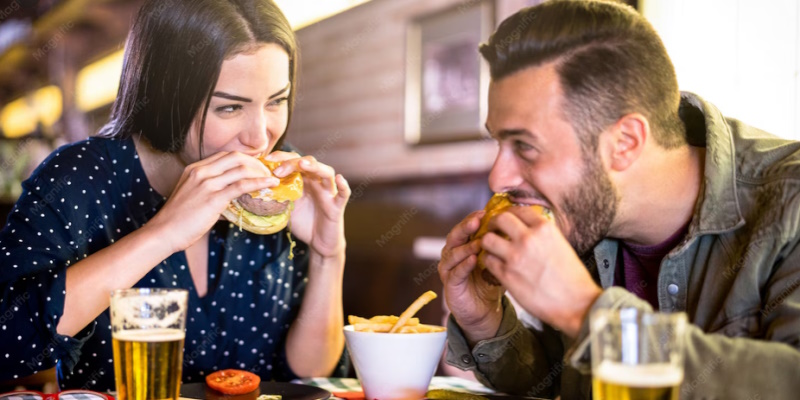
The day was brutal. Your inbox a graveyard of urgent requests, your to-do list grew a second head, and the silence of your living room feels loud. Then, a thought flickers. It’s not even a conscious decision, it’s more like a phantom limb sensation. You suddenly crave for a thick oily pizza.
Not just any pizza, but the kind you had during those late-night study sessions in college, or perhaps that one spot your family frequented every Friday growing up.
It feels like hunger. You might even call it a “craving.”
But let’s be honest: your body isn’t starving. Your blood sugar is fine. What you are experiencing isn’t a nutritional deficit; it’s a form of time travel.
The Predictive Coding Trap of Conditioned Compensation
Most mistake this for a lack of willpower, a character flaw, or an addiction to grease and salt. Gimme a cheeseburger with extra fries.
They beat themselves up, vow to do better tomorrow, and then repeat the exact same cycle when the next stressor hits.
The reason this cycle persists is you are trying to solve a psychological glitch with a “junk food” fix.
It’s time to stop eating this way and start understanding the biological ghost in your machinery.
The Brain Is a Prediction Machine
To understand why you reach for specific comfort foods during times of stress, you have to remember your brain is not a reactive organ. It is a predictive one.
Your brain is constantly running simulations, of what is going to happen next to keep you alive.
You become stressed, have a difficult conversation, or experience soul-crushing loneliness, your brain enters a state of high-alert. It senses the discomfort. It feels the “danger” of that stress.
Then, it scans its database for a solution. It looks back into your history.
It searches for moments where you were under stress but somehow found relief. And there, tucked away in your hippocampus, the brain’s center for memory, it finds a high-calorie reward.
Why It’s Called Comfort Food
Maybe it was a pepperoni pizza after a hard breakup. Maybe it was a burger that signaled the start of a summer vacation. Your brain tags that food not as “lunch,” but as a Safety Signal.
It concludes: “We were stressed then, and we ate this, and we survived. Therefore, eating this is the mechanism that ensures our survival today.”
This is not a dietary choice. It is a biological calculation designed to return you to a state of equilibrium. You aren’t craving the food. You are craving the safety you felt the last time you consumed it.
The Loop of Conditioned Compensation
This is where the concept of conditioned compensation becomes a trap. Think of it like a shortcut on a computer desktop.
When you click that icon, the program launches immediately. Your brain has created a “shortcut” between Stress and High-Calorie Comfort Food.
When you feel the weight of life pressing down, your brain executes the script. It releases a hit of dopamine in anticipation of the reward.
That dopamine spike makes you feel better before you even take the first bite. That’s the “compensation.”
You are compensating for the emotional distress of the present by downloading the emotional safety of the past. The problem, the safety is a mirage.
The burger is real, the pizza is real. But the relief they provide is fleeting. The actual chemical reward, the dopamine and opioids, wears off in minutes.
Same Issues More Calories
Once the meal is finished, you are left with the same stressor you started with, plus the physiological “comedown” of a blood sugar crash.
Because the relief was temporary, your brain doesn’t learn that the strategy failed. Instead, it learns that the strategy worked briefly but requires more of the stimulus to achieve the same result next time.
This is how people find themselves trapped in patterns of emotional eating that feel impossible to break.
You aren’t failing to control your appetite. You are successfully repeating a pattern your brain believes is essential for your protection.
Why Willpower Will Always Fail You
If you’ve ever tried to “white-knuckle” your way through a craving, you know exactly how this story ends. You tell yourself, “I am not going to order takeout tonight.” You power through for two hours.
But your prefrontal cortex, the part of the brain responsible for logical decision-making and impulse control, is an energy-hungry organ. It gets tired. It depletes quickly when you are stressed.
Once your willpower is exhausted, the predictive coding system takes over. It doesn’t negotiate, it doesn’t care about your diet goals, your fitness journey, or your long-term health.
It simply identifies a threat to your stability and deploys the only tool it knows is effective: the comfort food shortcut.
When you fight your brain with pure force of will, you are fighting a system that has been honed by millions of years of evolution. You are bringing a knife to a drone strike.
To win, you don’t need more willpower. You need a new script.
Your Identity Is Not a Craving
This is the most important realization: You are not your cravings.
When you identify with your urges, when you think, “I am the kind of person who eats junk when I’m stressed,” you solidify that neural path. You make it a part of your personality.
You are a fluid, adaptable, and incredibly capable human being. The predictive coding trap is just that, a trap.
It’s an antiquated piece of software running on a high-tech machine. It is entirely possible to delete the program.
The cost of inaction is high. It’s not just about waistlines or health metrics; it’s about the constant, draining mental load of battling yourself every single day.
It’s about the shame that comes from feeling like you aren’t in the driver’s seat of your own life.
Why It’s Called “Comfort” Food
You have the power to stop being a victim of your past experiences. You have the power to look at that familiar urge, that phantom need for a slice of pizza or a burger.
What you need to do is recognize it for what it is: a misplaced memory seeking comfort.
Take back the reins. Stop trying to out-muscle your biology and start out-thinking it. Identify the trigger, build a better ritual, and step out of the loop.
Your future self is waiting, and it doesn’t need the comfort food to be safe. It justs need you to start leading.
Get Personalized Diet Recipes From Food You Already Own
Pantry-To-Plate Weight Loss Plan >
Upload an image of the current food you have in your fridge or pantry. PantryPilot will then instantly build recipes and a weight loss plan based around your chosen diet — Mediterranean, DASH, Keto etc. — and will adjust the diet as your body adapts.